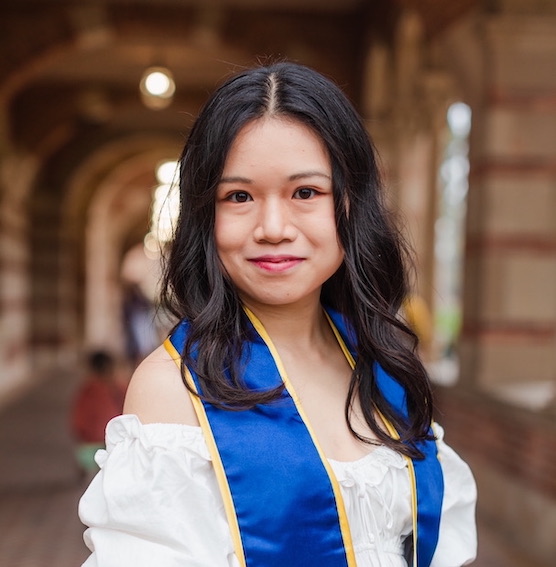
Hi! I’m Jingyou Rao, a Postdoctoral Researcher in the Coyote-Maestas Lab at UCSF. Trained as a computational biologist, I now work hands-on at the bench, developing high-order mutational scanning platforms that systematically generate functional data for proteins carrying two or more mutations.
I’m driven by a simple idea: mutations carry signals about protein function. By reading these signals across sequence space, we can begin to decode how proteins, and especially membrane proteins (ion channels, GPCRs, and transporters), achieve their remarkable, dynamic behaviors.
I’m also interested in applying deep mutational scanning to clinically relevant genes and study gene-by-drug interactions, with the long-term goal of enabling assays that can directly benefit patients.
I received my PhD from UCLA, advised by Harold Pimentel. My dissertation, “Statistical and Computational Methods to Uncover the Genetic Architecture of Protein Function”, tackles two core challenges:
- developing Bayesian approaches to quantify uncertainty in DMS experimental measurements, and
- using causal inference frameworks to model relationships between protein functions.
I also completed dual bachelor’s degrees in Computer Science and Computational & Systems Biology at UCLA.
Recent News
[July 2025] Successful defended my PhD thesis.
[August 2024] Presented a seminar talk on “Modeling Growth-based Deep Mutational Scanning Counts with Rosace” at Variant Effect Seminar Series online.
[May 2024] Presented a workshop talk on statistical inference methods of deep mutational scanning (DMS) in Mutational Scanning Symposium 2024 hosted at the Broad Institute.
[November 2023] Advancement to candidacy for the doctoral degree.
Publications
Cosmos: A Position-Resolution Causal Model for Direct and Indirect Effects in Protein Functions. Jingyou Rao, Mingsen Wang, Matthew K. Howard, et al.; bioRxiv 2025
Rosace-AA: Enhancing Interpretation of Deep Mutational Scanning Data with Amino Acid Substitution and Position-Specific Insights. Jingyou Rao, Mingsen Wang, Matthew K. Howard, et al.; Bioinformatics Advances 2025
dotears: Scalable, consistent DAG estimation using observational and interventional data. Albert Xue, Jingyou Rao, Sriram Sankararaman, Harold Pimentel; iScience 2025.
Mapping kinase domain resistance mechanisms for the MET receptor tyrosine kinase via deep mutational scanning. Gabriella O. Estevam, Edmond M. Linossi, Jingyou Rao, et al.; elife 2024.
Rosace: a robust deep mutational scanning analysis framework employing position and mean-variance shrinkage. Jingyou Rao, Ruiqi Xin, Christian Macdonald, et al.; Genome Biology 2024.
Presentations
J. Rao: Statistical and Computational Tools to Decode Genetic Architecture of Protein Functions Computational Genomics Research Institute, Los Angeles, USA (July 2025; Trainee Talk)
J. Rao: “Modeling Relationships in Multi-Phenotype DMS Using Graph Theory and Ensemble View” Mutational Scanning Symposium, Barcelona, Spain (May 2025; Poster)
J. Rao: “Modeling Growth-based Deep Mutational Scanning Counts with Rosace” Variant Effects Seminar Series by Atlas of Variant Effects Alliance, Virtual (August 2024; Invited Talk) Youtube link.
J. Rao, H. Pimentel: “What is in a variant score?” Mutational Scanning Symposium, the Broad Institute, USA (May 2024; Workshop Talk) Youtube link. Highlighted in news.
J. Rao, H. Pimentel: “Computational approaches for inferring gene regulation in in situ perturbation screens” Biological Data Science, Cold Spring Harbor Laboratory, USA (November, 2022; Talk)
J. Rao, N. Mancuso, H. Pimentel: “Quantifying uncertainty in estimation of isoform expression heritability” Genome Informatics, Cold Spring Harbor Laboratory, USA (November, 2021; Poster presentation)
J. Rao, K. Burch, H. Pimentel: “Quantifying uncertainty in heritability estimation with small sample sizes” Bruins-In-Genomics Summer, UCLA, USA (August, 2020; Oral presentation)